Outdoors
Wild Swimming in Scotland
Scottish lochs, rivers and seas are cold all year, so a safe swim starts with slow entry, good company, a tow float and knowing when to get out.
In an emergency in the hills or at the coast call 999: ask for the police and mountain rescue in the hills, the coastguard at the coast. Check the forecast and official advice before you set out.
In this guide
Cold water shock is the biggest risk for anyone getting into a Scottish loch, river or the sea, so enter slowly, never swim alone and, if you get into trouble, float on your back until your breathing settles. With the right checks, kit and reactions, you can keep the hazards low.
Cold water is the first hazard
The RNLI says water below 15°C can trigger cold water shock, which can make you lose control of your breathing and movement and sharply raises heart rate and blood pressure. Scottish waters are often below that, even in summer. The initial effects pass in less than a minute, so fight the instinct to swim hard. The RNLI's Float to Live advice is to tilt your head back with your ears submerged, relax and try to breathe normally, use your hands to help you stay afloat, and call for help or swim to safety once your breathing is under control.
Enter the water slowly and let your body get used to the temperature rather than jumping straight in. Keep early swims short and stay close to shore. The Met Office advises getting out as soon as you notice shivering, feeling weak or disorientated, taking in water or shortness of breath.
Choose the right place and avoid obvious hazards
Some hazards in Scotland's rivers, lochs and seas are easy to spot, which is why it's important to look for them. Weirs, sluices, locks and pipes can create strong, hidden currents, so don't swim near them. Rivers rise and speed up quickly after rain, riverbeds hide boulders and branches, and lochs can be deep and cold just a few metres from the edge. At the coast, check tides and look out for rip currents. Never jump or dive in unless you know the depth and what lies beneath, and pick your exit point before you get in.
Water quality can drop after heavy rain. The Scottish Environment Protection Agency (SEPA) monitors Scotland's designated bathing waters during the bathing season and publishes daily water quality predictions for some of them online and on beach signs. Swimming is covered by Scottish access rights, as long as you follow the Scottish Outdoor Access Code and take responsibility for your own safety.
What to wear, who to swim with and warming up
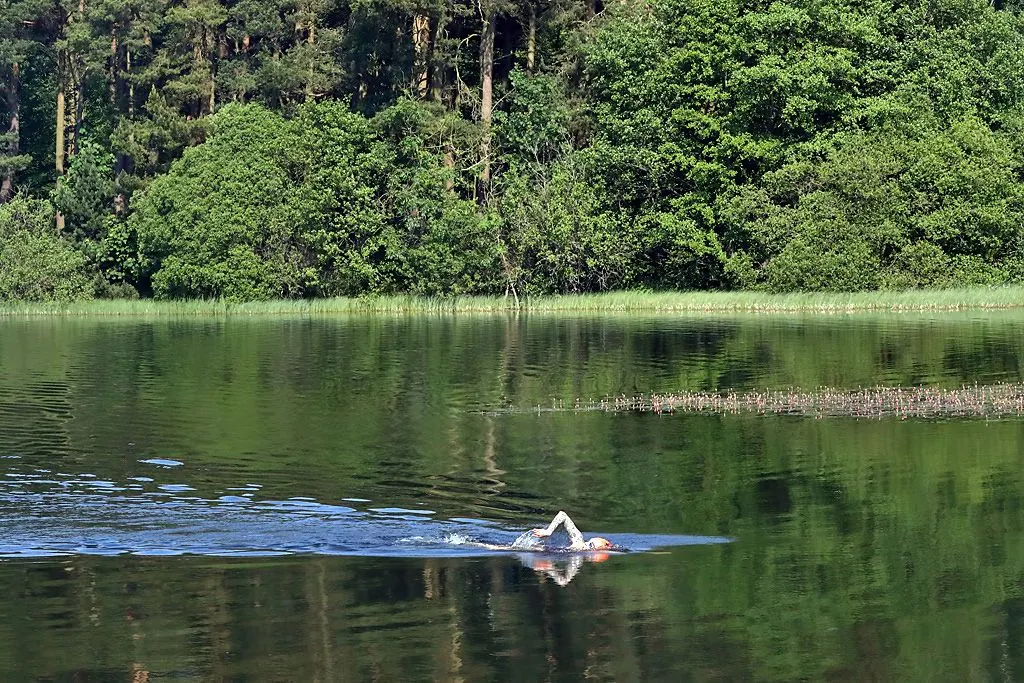
Go with friends or a local open-water group, and tell someone at home where you are going and when you will be back. Take a brightly coloured tow float and wear a bright swim hat, so you are easy to see and have something to hold if you need a rest. A wetsuit adds warmth and buoyancy, and neoprene gloves, socks or boots help when the water is particularly cold.
Afterwards, start getting warm straight away: dry off, put on plenty of warm layers and a hat, have a hot drink and then get moving, as a brisk walk helps your body warm back up. Your core temperature can keep falling for a while after you leave the water, often called after-drop, so don't hang about in wet kit.
If you see someone in trouble, don't go in after them. Call 999, and at the coast ask for the Coastguard; throw them something that floats and tell them to float on their back. If you have a heart condition, high blood pressure, a breathing problem or another health condition, or are pregnant, speak to a GP before trying cold water swimming, and get out and seek help if you feel chest pain, dizziness or unusual breathlessness.
Check conditions, respect local hazards and get out early if you feel cold or overwhelmed: in Scottish water, a short swim is a safe swim.