Get Active
No-Equipment Home Workout
Six bodyweight moves, a proper warm-up and a simple way to progress, so a complete beginner can build strength at home without buying any kit.
General information, not medical advice. If you have a health condition, are pregnant or notice chest pain, dizziness or unusual breathlessness, speak to a GP or health professional before you start or carry on.
In this guide
A beginner can do a quick, equipment-free home workout safely by warming up first, using simple bodyweight moves such as squats, wall press-ups, lunges, glute bridges, a plank and step-ups on the bottom stair, and never pushing through pain. Twice a week is enough to meet the UK guideline for muscle strengthening.
Warm-up and safety
Before you begin, spend at least 6 minutes warming up, as the NHS suggests: march on the spot while pumping your arms, then add heel digs, knee lifts, shoulder rolls and a few gentle knee bends. Wear loose, comfortable clothing, clear some floor space and keep water nearby. When doing these moves at home, start slowly and stop if you feel any pain or discomfort. If you have a health condition, heart or joint problems, are pregnant, or get chest pain, dizziness or unusual breathlessness, stop and seek advice from a GP or health professional before carrying on.
The all-body beginner circuit
Work through the six moves in order, aiming for 10 to 15 repetitions of each, or 20 to 30 seconds for the plank, the targets given in an NHS Professionals home-exercise sheet. Beginners can do fewer and rest as long as they need between moves.
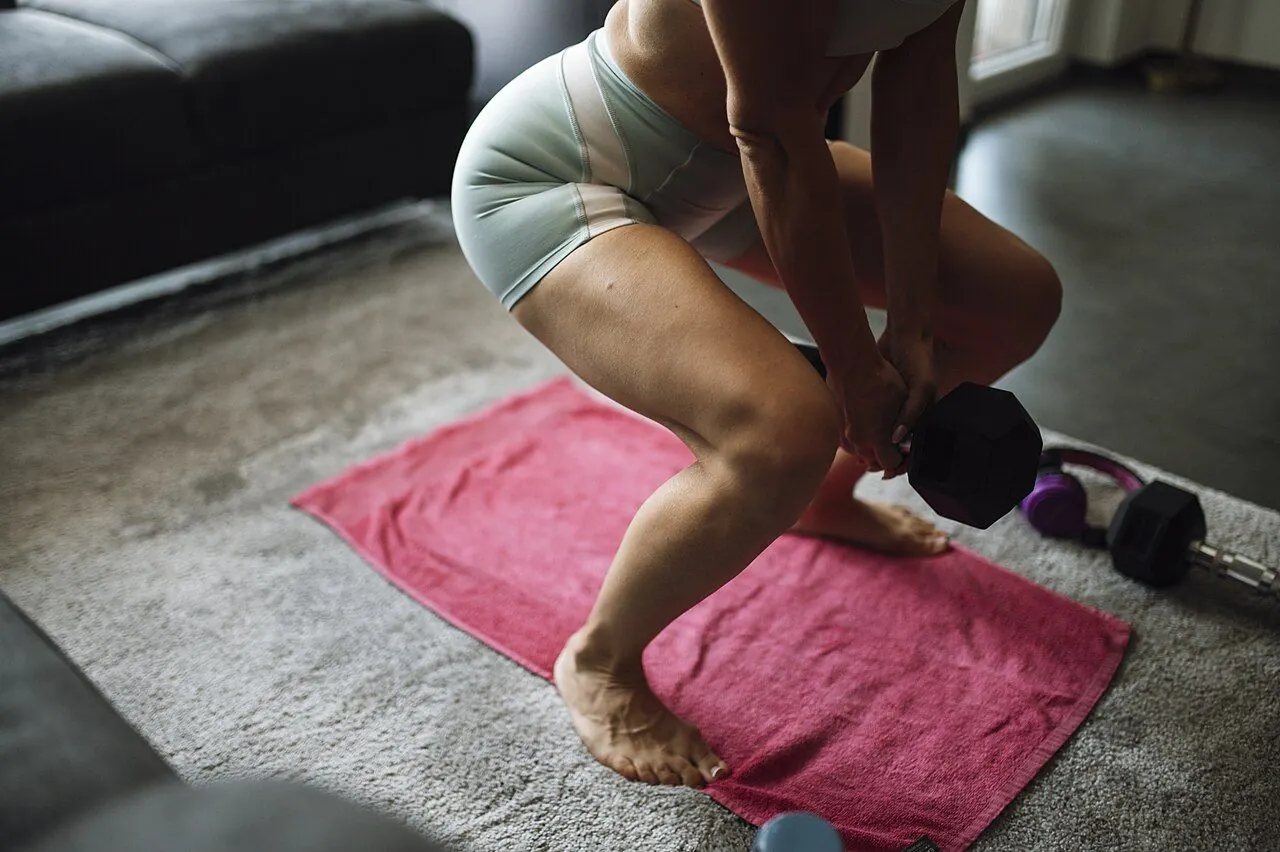
- Squats. Stand with feet hip-width apart, toes pointing forward, holding the back of a sturdy chair for balance if you need to. Slowly bend your knees and push your hips back as far as is comfortable, keeping your knees facing forwards and your back straight, then stand back up.
- Wall press-ups. Stand at arm's length from a wall, place your hands flat against it at chest level, and slowly bend your arms, keeping your elbows by your sides and your back straight. Push back to the start.
- Lunges. Step one foot forward and lower your back knee towards the floor, keeping your front knee above your ankle and your back straight. Push back up and switch legs. Hold a wall or chair for balance at first.
- Glute bridges. Lie on your back, knees bent and feet flat on the floor. Squeeze your buttocks and raise your hips until your knees, hips and shoulders make a straight line. Hold for a moment, then slowly lower.
- Plank. Lie on your front, then lift yourself onto your forearms and toes, with elbows under your shoulders. Keep your back straight and your stomach muscles tight. Beginners can rest their knees on the floor.
- Step-ups. Stand facing the bottom stair, holding the banister. Step up with one foot, push through the heel to straighten the leg, then step down slowly. Repeat, leading with the other leg.
How often to exercise and how to progress
The UK Chief Medical Officers' guidelines say adults should do muscle-strengthening activity on at least 2 days a week, and exercises using your own body weight count. On other days, aim for aerobic activity such as brisk walking towards the 150 minutes a week of moderate activity the NHS recommends. Rest days between sessions give your muscles time to recover, and some aching the day after a new exercise is normal.
Build up slowly and gradually. When a round feels easy, add a few repetitions, hold the plank a little longer, or add a second round. Later, progress to harder versions, such as press-ups against a kitchen worktop instead of a wall, or a full plank on your toes. Good form matters more than speed or numbers, so slow down if your technique slips.
These basics are a practical start for anyone who wants to get stronger at home without buying anything.
Sources checked
- nhs.uk/live-well/exercise/strength-exercises
- nhs.uk/live-well/exercise/how-to-warm-up-before-exercising
- nhsprofessionals.nhs.uk/-/media/hosted-documents/18835covid19wellbeingpackhomeexercises210420.pdf
- gov.uk/government/publications/physical-activity-guidelines-uk-chief-medical-officers-report/uk-chief-medical-officers-physical-activity-guidelines