Sport
Highland Games Events Explained
From the caber and the 56 lb weight to massed pipe bands and hill races, what a first-time visitor will see at a Scottish Highland games.
General information, not medical advice. If you have a health condition, are pregnant or notice chest pain, dizziness or unusual breathlessness, speak to a GP or health professional before you start or carry on.
Highland games are Scotland's summer gatherings of heavy athletics, piping, Highland dancing, running and tug of war. The season runs from May to September, peaking in July and August, when there are games almost every weekend.
They are community events held across the country, from the Highlands and islands to Aberdeenshire and the central belt, and each has its own character. What you will see at most of them falls into three groups: the heavy events, piping and dancing, and races and team contests.
The Heavy Events
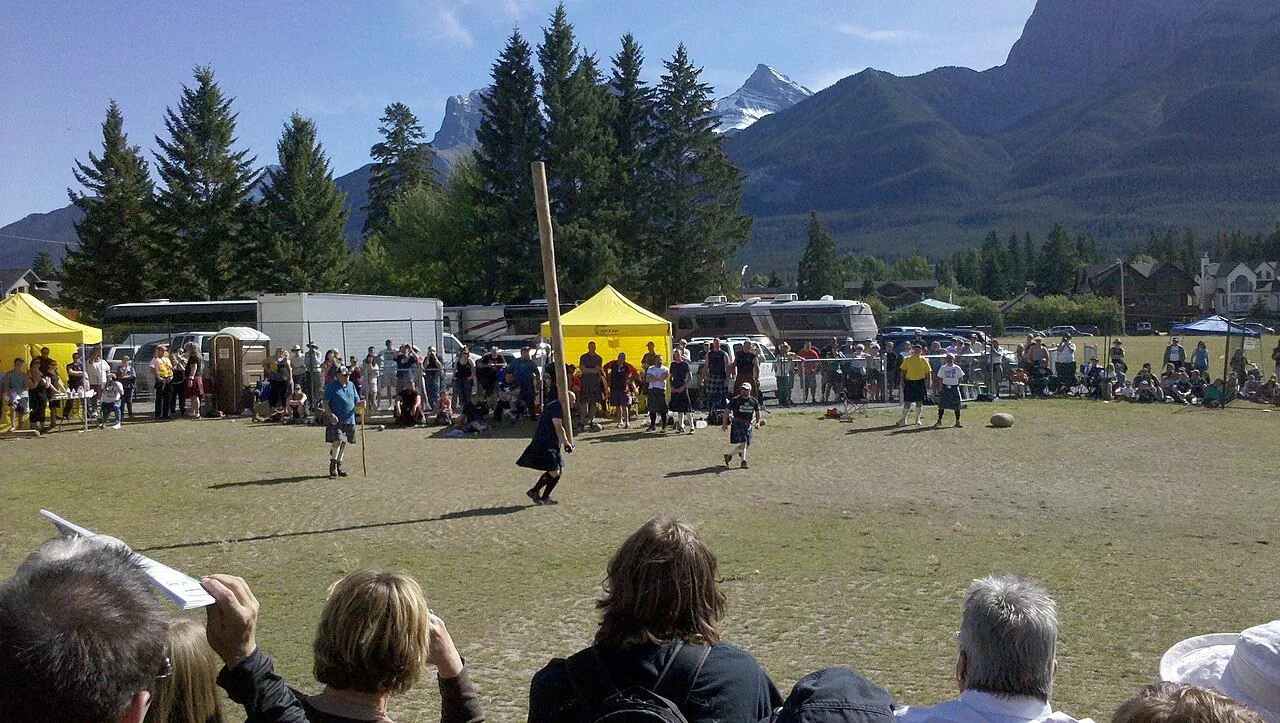
The centrepiece of any Highland games is the heavy events, which combine strength, skill and showmanship. Foremost among these is tossing the caber. A full-length log, usually Scots pine, is lifted upright, run forward and tossed so that it turns end over end, with the top end landing first. The aim is not distance: the caber should land in line with the thrower's run, which is called the twelve o'clock position, and competitors are judged on how close to twelve o'clock their toss falls.
| Event | What happens |
|---|---|
| Stone put | A stone of around 20 to 26 lb is thrown as far as possible, from a standing position or a short run-up, depending on the games |
| Hammer throw | A metal ball on a wooden handle, around 22 lb for men and 16 lb for women, is whirled around the head and thrown for distance |
| Weight for distance | A weight on a short handle and chain is thrown one-handed as far as possible |
| Weight over the bar | A 56 lb (25.4 kg) weight is thrown one-handed over a bar that is raised after each round |
| Sheaf toss | At some games, a sack of straw is pitched over a raised bar with a pitchfork |
Piping, Dancing, Races and Tug of War
Interspersed with the heavy events are Highland dancing and bagpiping. Dancers compete in solo categories by age, performing traditional dances such as the Highland fling and the sword dance, and are judged on timing, technique and deportment. Many games hold solo piping competitions, and one of the highlights of many gatherings is the massed pipe bands, when pipers and drummers march and play together.
Most games also include track and cycling races, and many feature a hill race up and down a nearby slope. The tug of war is one of the most fiercely contested events: eight pullers on each team, with a coach shouting instructions, try to drag their opponents across the line. Children's races and junior dancing and piping categories are common too.
Braemar and How to Find Games
The best-known gathering is the Braemar Gathering in Aberdeenshire, held on the first Saturday of September. Its organisers trace a tradition of gatherings there back to the time of King Malcolm Canmore, over 900 years ago; the Gathering has run in its present form since 1832, and Queen Victoria's visit in 1848 began a long tradition of attendance by the reigning monarch and members of the Royal Family.
Braemar is far from the only option. The Royal Scottish Highland Games Association, the governing body for Highland games in Scotland, publishes the dates and locations of its member games each year, and VisitScotland lists games across the country. Dates, programmes and ticket prices change from year to year, so check the official website of the games you plan to visit before you travel.