Sport
How Curling Works
Granite stones, a target on the ice and brooms that steer the shot: the rules of Scotland's own winter game and where beginners can have a go.
General information, not medical advice. If you have a health condition, are pregnant or notice chest pain, dizziness or unusual breathlessness, speak to a GP or health professional before you start or carry on.
Curling is a team game in which players slide granite stones along a sheet of ice towards a target called the house, sweeping the ice to steer them. After every player has delivered two stones, the team with the stone nearest the centre scores a point for each of its stones closer than the opponents' best.
Scotland is usually credited with inventing curling in the 16th century, and it was in Scotland that the first organised clubs were founded. The Royal Caledonian Curling Club, founded in 1838, is still the sport's governing body in Scotland and trades as Scottish Curling.
Stones, Sheet and House
Curling stones are made from dense granite from just two places: Ailsa Craig, an uninhabited island off the south-west coast of Scotland, and Trefor Quarry in Gwynedd, North Wales. A stone cannot weigh more than 19.96 kg (44 lb) and has a handle on top.
The stones are delivered towards a target painted on the ice called the house: a set of concentric rings 12 feet (3.66 m) across, with the centre known as the button or tee. There is a house at each end of the sheet. Players push off from a rubber foothold called the hack and must release the stone before it reaches the near hog line; to stay in play, it must pass the far hog line, 21 feet (6.4 m) before the tee, and stop before the back line behind the house.
Ends, Scoring and Sweeping
A team has four players: lead, second, third (vice-skip) and skip. Each player delivers two stones, alternating with their opposite number, so an end is complete when all 16 stones have been played. Only one team scores in an end: it earns one point for every stone in the house that is closer to the tee than the opponents' nearest stone, so the most it can score is eight. If no stone is in the house, nobody scores. International matches are played over 10 ends and mixed doubles over 8; club games are often shorter.
The team that delivers the last stone of an end holds the hammer, a big advantage because nothing can be played after it. In general, the team that scores in an end gives up the hammer for the next one, and a team without the hammer tries to steal points or force its opponents to settle for a single point.
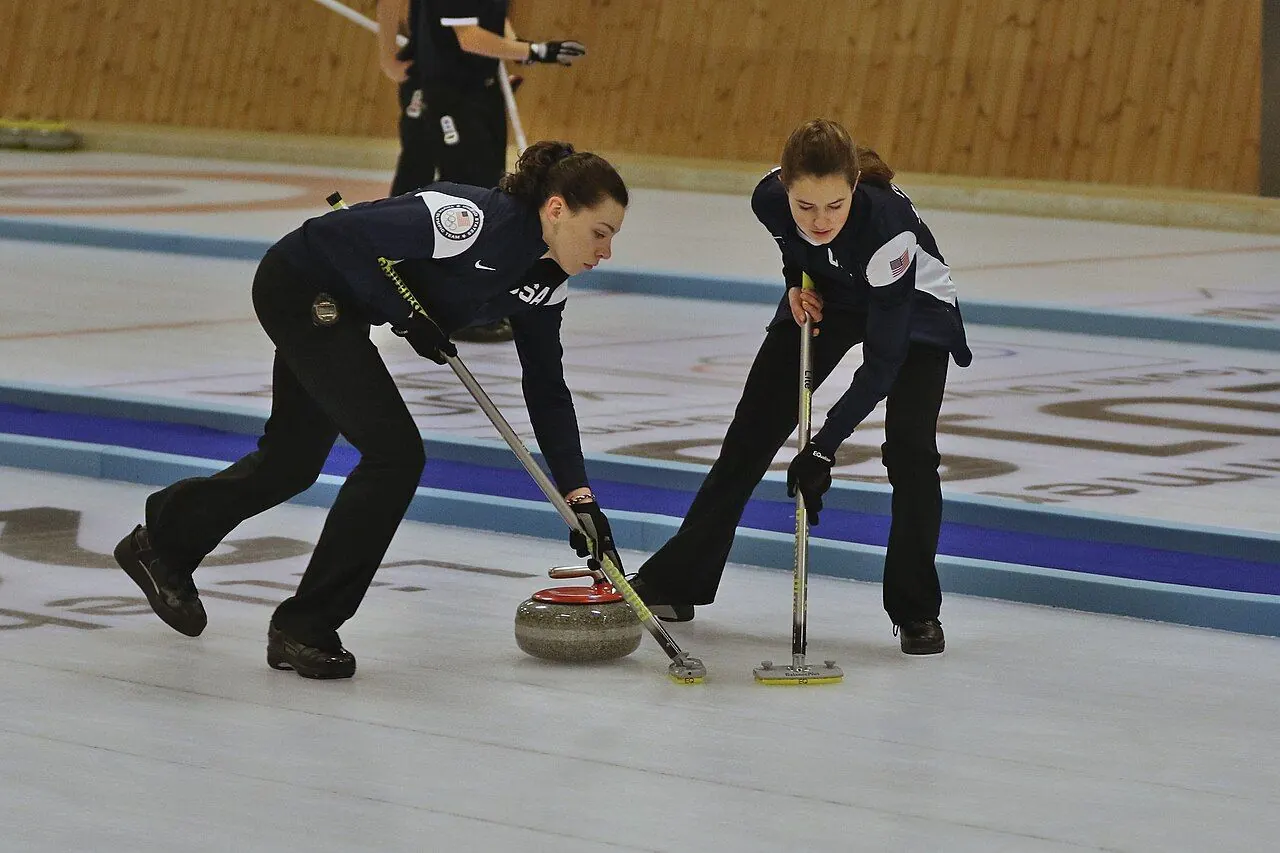
Sweeping the ice in front of a moving stone smooths the surface and removes stray ice particles, so the stone travels further and curls less. That lets the sweepers adjust both the distance and the line of a shot after it has been released. Under World Curling rules, behind the tee line at the far end only one player from each team may sweep at a time.
The skip is the team captain. The skip stands at the house end, reads the ice, chooses each shot and uses the broom as a target to show teammates where to aim, while calling to the sweepers on when to sweep. The skip usually delivers the team's last two stones, and the vice-skip takes over at the house while the skip is throwing. Good etiquette matters as much as rules: players shake hands before and after the game, stay still and quiet while opponents deliver, and many teams traditionally share a drink together afterwards.
How to Try Curling in Scotland
Scottish Curling's Try Curling programme lists taster sessions and beginner courses at more than 20 rinks across the UK, delivered by qualified coaches, with junior, wheelchair and disability sessions too. The season traditionally runs from September to March, so availability is limited in summer. Wear warm, stretchy clothing and clean flat-soled trainers; the rink provides stones and brooms. If you have a health condition, joint or balance problems, are pregnant, or feel pain, chest pain or dizziness, stop and speak to a GP or health professional before carrying on. Check session times and costs on the booking page before you go.